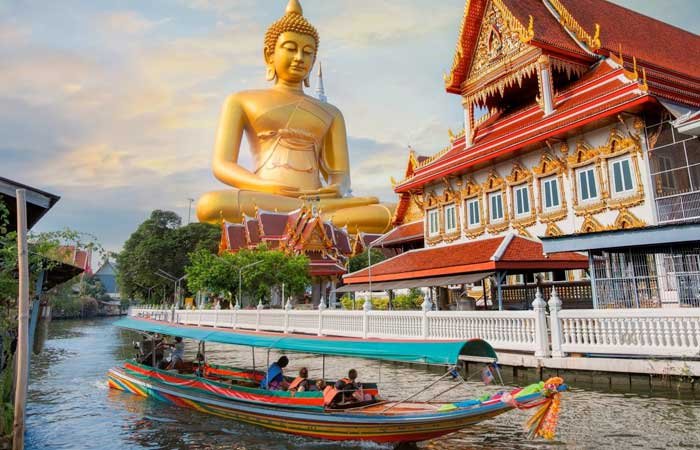
Bangkok, the capital city of Thailand, is a dynamic metropolis that blends traditional Thai culture with modern developments. Known for its vibrant street life, cultural landmarks, and delicious street food, Bangkok offers an unforgettable experience for travellers. The city’s architecture reflects its unique blend of old and new, with grand temples, traditional houses, and contemporary skyscrapers. Whether you’re visiting for history, shopping, or dining, Bangkok has something to offer every traveler.
Bangkok’s architecture is a fascinating mix of traditional Thai design and modern influences. The most iconic structures are the Buddhist temples and palaces, which showcase stunning intricate details and golden features. The Grand Palace, once the residence of the Thai kings, is a prime example of Thai architectural brilliance, with its ornate buildings and beautiful Wat Phra Kaew (Temple of the Emerald Buddha). Wat Arun (Temple of Dawn), located along the Chao Phraya River, is another iconic temple with its towering spires and intricate mosaics.
In contrast, Bangkok’s modern skyline is dominated by sleek skyscrapers and shopping malls. The King Power Mahanakhon building, one of Bangkok’s tallest structures, features a unique design with its pixelated pattern. Additionally, the city has a growing number of high-end hotels and luxury condos, particularly in neighbourhoods like Sukhumvit and Silom. Despite its rapid urbanisation, Bangkok has maintained its traditional wooden Thai houses in areas like Banglamphu and Tha Tien, adding a historical charm to the city’s diverse architectural landscape.
Founded in 1782, Bangkok became the capital of Thailand under the reign of King Rama I. The city’s growth was spurred by its strategic location along the Chao Phraya River, which facilitated trade and transportation. During the 19th century, under King Rama IV and King Rama V, Bangkok underwent significant modernisation, with new infrastructure, schools, and Western-style buildings.
Throughout its history, Bangkok has played a crucial role in shaping Thailand’s political, cultural, and economic development. The city was a focal point during the Thai Revolution of 1932, which transitioned the country from an absolute monarchy to a constitutional monarchy. Today, Bangkok continues to be Thailand’s economic powerhouse and cultural capital.
There is no shortage of things to see and do in Bangkok. Temples and palaces are among the most popular attractions. The Grand Palace and Wat Phra Kaew should be at the top of any traveler’s list. Wat Pho is another must-see temple, home to the massive Reclining Buddha and traditional Thai massage school.
For a more modern experience, head to the vibrant Siam Square and MBK Center for shopping, dining, and entertainment. Chatuchak Weekend Market is one of the largest markets in the world, offering everything from clothing to antiques and street food. Asiatique the Riverfront is another popular spot for shopping, dining, and enjoying riverside views.
Khao San Road is famous for its nightlife and backpacker atmosphere, while Chinatown (Yaowarat) offers a unique blend of Thai-Chinese culture, street food, and markets. For a taste of Bangkok’s royal history, visit Jim Thompson House, the former home of an American entrepreneur and the centre of the Thai silk industry.
If you’re looking to escape the hustle and bustle, take a boat ride along the Chao Phraya River or explore the Lumphini Park, an urban oasis where locals go to relax and exercise.
For those seeking an authentic Thai experience, don’t miss out on the street food scene. Try local dishes such as Pad Thai, Tom Yum Goong (spicy shrimp soup), Mango Sticky Rice, and Som Tum (green papaya salad) from street vendors throughout the city.
The best time to visit Bangkok is during the cool season from November to February when the weather is more pleasant, with temperatures ranging from 70°F to 90°F (21°C to 32°C). This period is also the peak tourist season, so expect larger crowds and higher prices at popular attractions and hotels.
The hot season (March to June) in Bangkok can be sweltering, with temperatures often exceeding 95°F (35°C), making outdoor activities less comfortable. However, if you don’t mind the heat, this is a great time to visit for fewer crowds and lower hotel rates.
The rainy season (July to October) brings heavy but brief downpours, which can affect outdoor sightseeing. However, this is also when the city is lush and green, and you can find discounts on accommodations and flights.
Bangkok is a city of contrasts, where ancient temples sit beside towering skyscrapers, and traditional markets coexist with modern shopping malls. Whether you’re exploring its cultural landmarks, sampling the vibrant street food, or shopping at bustling markets, Bangkok offers an unforgettable experience. The best time to visit is during the cool season (November to February), when the weather is ideal for outdoor activities and sightseeing. With its rich history, dynamic architecture, and exciting things to do, Bangkok is a must-visit destination for travellers looking to experience the heart of Thailand.