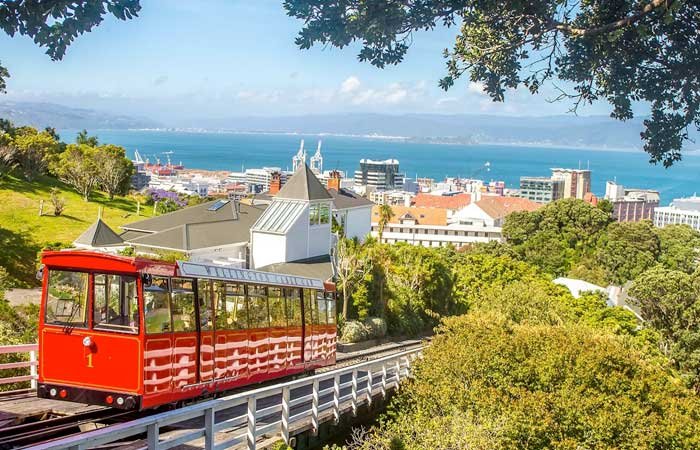
Wellington, the capital city of New Zealand, is a vibrant cultural and political hub nestled between rugged hills and a picturesque harbour. Known for its lively arts scene, stunning landscapes, and welcoming atmosphere, Wellington offers a blend of historical landmarks, modern architecture, and outdoor activities, making it a must-visit destination for travellers. Whether you’re an art enthusiast, history buff, or nature lover, Wellington has something to offer.
Wellington’s architecture is an eclectic mix of colonial buildings, modern constructions, and sustainable design. The city’s early colonial architecture can be seen in landmarks like the Old Government Buildings, one of the largest wooden structures in the Southern Hemisphere. Another example is St. Paul’s Cathedral, an iconic wooden church dating back to the 19th century.
The Beehive, the executive wing of the New Zealand Parliament, is a modern architectural marvel, characterised by its unique circular design. Located next to the Parliament Buildings, it is one of Wellington’s most recognisable landmarks. The Te Papa Museum, New Zealand’s national museum, is another architectural highlight. Its modern design blends seamlessly with the city’s natural beauty and offers world-class exhibitions related to New Zealand’s culture, history, and natural environment.
Wellington is also a leader in sustainable design. The city’s eco-friendly initiatives are reflected in several buildings, including the Mac’s Brewbar, a brewery built with environmentally conscious principles, and the Wellington City Library, which incorporates energy-efficient features.
Wellington’s history dates back to the early 19th century when the first European settlers arrived in the area. Originally settled by the Māori people, Wellington was chosen as the capital of New Zealand in 1865 due to its central location and strategic harbour. The city grew rapidly as it became the political and economic centre of the country.
Wellington’s rich history is reflected in its many museums and historical sites. Te Papa Museum, as mentioned, provides insight into New Zealand’s history, including its Māori heritage, European colonisation, and natural history. The Wellington Cable Car offers both a fun experience and a glimpse into the city’s past, as it has been operating since 1902, taking visitors up to the Botanic Gardens.
Wellington also played a significant role in the country’s film industry, with Weta Workshop being a prominent name in film production. The city gained international recognition as the home of The Lord of the Rings trilogy and continues to thrive as a hub for film and media.
Wellington is packed with attractions, offering something for every type of traveler. Nature lovers will enjoy exploring Wellington Botanic Garden, accessible via the Wellington Cable Car, which offers panoramic views of the city. For even more stunning views, head to Mount Victoria, where you can hike or drive to the top to see the city, harbour, and surrounding hills.
If you’re a fan of the arts, Wellington’s Te Papa Museum and the City Gallery Wellington are must-visits for contemporary exhibitions. The Wellington Museum provides an interactive experience of the city’s maritime history, while Weta Workshop offers behind-the-scenes tours of the special effects used in iconic films like *The Lord of the Rings.
For a more relaxed experience, stroll along Oriental Bay, Wellington’s most popular beach, or enjoy the vibrant Cuba Street, lined with boutique shops, cafes, and restaurants. Zealandia, a wildlife sanctuary just outside the city, is perfect for those who want to experience New Zealand’s native flora and fauna up close, including rare species like the kiwi bird.
Wellington also offers a dynamic food scene, with an array of top-notch restaurants, food markets, and cafes. The Wellington Night Market and the Harbourside Market offer delicious local treats, from fresh seafood to unique pastries. Don’t forget to try Wellington’s coffee, known for being some of the best in the country.
The best time to visit Wellington is during the spring (September to November) and summer (December to February) months. During these seasons, the weather is mild, with temperatures ranging from 15°C to 25°C (59°F to 77°F), making it ideal for outdoor activities such as hiking, sightseeing, and exploring the city’s beautiful parks and gardens.
Autumn (March to May) is also a great time to visit, as the city experiences fewer tourists, and the changing colours of the leaves in the Botanic Gardens and around the city add to the scenic beauty. However, winter (June to August) can be quite cold and windy, with temperatures ranging from 6°C to 12°C (43°F to 54°F). This season is still great for indoor attractions like museums, cafes, and galleries.
Wellington, New Zealand’s capital, offers a mix of rich history, stunning architecture, and natural beauty. Whether you’re exploring Te Papa Museum, hiking up Mount Victoria, or relaxing on Oriental Bay, the city has a wide range of experiences to offer. The best time to visit is during the spring and summer months for mild weather and outdoor exploration. Wellington’s combination of arts, culture, food, and scenic views makes it a must-visit destination for any traveler exploring New Zealand.